

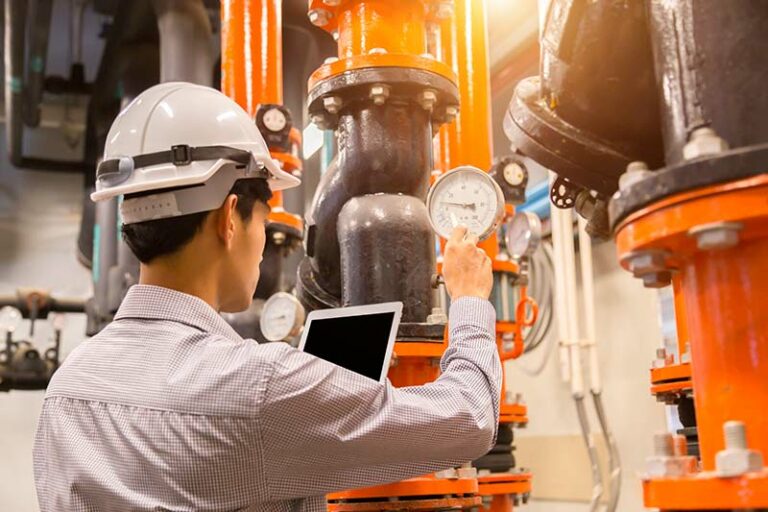
Why Valve Testing Is Important?
And Why Companies Never Skip It!
In industrial systems, a valve is more than just a component; it is a critical control point. Whether it regulates steam in a power plant, chemicals in a refinery, or water in a municipal pipeline, a valve failure is not a minor inconvenience. It can mean equipment damage, process shutdown, financial loss, or in worst cases, a serious safety incident.
This is exactly why valve testing is not optional. It is a fundamental quality and safety practice.
What Is Valve Testing?
Valve testing is the process of verifying that a valve performs correctly under the specific pressure, temperature, and flow conditions it will face in real operation. It covers aspects like leak tightness, pressure integrity, seat performance, torque requirements, and operational response.
Testing is done at multiple stages during manufacturing, before installation, and periodically during a valve’s operational life.
Why Valve Testing Matters
- Safety Comes First
Untested valves are unpredictable valves. In high-pressure or high-temperature systems, a valve that leaks or fails to shut completely can trigger dangerous pressure buildup, fluid spillage, or system explosions. Proper testing confirms that a valve will hold under stress protecting personnel, plant, and environment.
- It Prevents Costly Failures
Replacing a faulty valve after a breakdown is always more expensive than catching the issue during testing. Unplanned shutdowns in industrial plants can cost lakhs per hour. A thorough valve test before commissioning is one of the most cost-effective steps a plant manager can take.
- Compliance with Industry Standards
Industrial valves are governed by international standards like API 598, API 6D, BS 6755, and ISO 5208. These standards mandate specific hydrostatic, pneumatic, and seat leak tests. Compliance is not just about best practices, it is often a legal and contractual requirement, especially in sectors like oil & gas, pharmaceuticals, and water treatment.
- Ensures Accurate Flow Control
A valve that opens or closes incorrectly affects the entire process flow. Even a small seat leak in a control valve can skew flow rates, compromise product quality, and waste resources. Testing validates that the valve delivers the precise control your process depends on.
- Extends Operational Life
Valves that are properly tested before installation and regularly inspected during service last significantly longer. Testing reveals early signs of wear, corrosion, or internal damage that, if unaddressed, lead to premature failure and costly replacements.
- Builds Confidence Across the Supply Chain
When a valve manufacturer tests every product before dispatch, it gives engineers, procurement teams, and plant operators a solid assurance of quality. It reduces on-site surprises and streamlines project timelines.
Types of Valve Tests Commonly Performed
Hydrostatic Shell Test — checks the structural integrity of the valve body under water pressure, typically at 1.5 times the rated pressure.
Seat Leak Test (Low and High Pressure) — verifies that the valve seals completely in the closed position, with zero or acceptable leakage per standard classifications.
Pneumatic Test — uses air or gas to test valves that cannot be exposed to water, typically at lower pressures.
Operational / Function Test — confirms the valve opens and closes smoothly across its full range of travel, with acceptable torque and without mechanical binding.
Fire-Safe Testing — required for valves used in hazardous environments, confirming they maintain sealing performance even after fire exposure.
Khimji Flow Equipments — Built on Testing, Built on Trust
At Khimji Flow Equipments Pvt. Ltd., every valve that leaves our facility undergoes rigorous testing in line with applicable international standards. We believe that a tested valve is a trustworthy valve and in industrial environments, trust is everything.
Our in-house testing infrastructure ensures that your flow equipment performs exactly as specified, right from day one. Whether it is a ball valve, gate valve, butterfly valve, or control valve, we test for pressure integrity, seat tightness, and operational reliability before dispatch.
When you source from Khimji Flow Equipments, you are not just buying a product. You are buying verified performance.
Final Thought
Valve testing is not an added step it is the step that separates reliable industrial systems from risky ones. In an environment where precision, safety, and uptime are non-negotiable, skipping valve testing is never worth the gamble.
Get in touch with Khimji Flow Equipments Pvt. Ltd. to learn more about our testing standards and product range.